 CNC ELECTRIC GROUP ZHEJIANG TECHNOLOGY CO.,LTD
 Products
 Projects
 Solutions
 Service
 News
News About CNC
 Contact Us
In electrical design, switchgear and switchboard are often used as if they mean the same thing. This is a serious mistake. They represent fundamentally different equipment in function, design, and application, and mixing them up can lead to costly errors.
The core distinction is this: switchgear is built to protect, control, and isolate electrical circuits, typically at medium to high voltages. A switchboard, on the other hand, is designed to send power out to multiple loads, and it almost always works in low-voltage systems.
This guide will break down the switchgear vs switchboard debate step by step. We will move from basic definitions to detailed comparisons of standards, construction, and real-world use, giving you a clear framework for making the right choice.
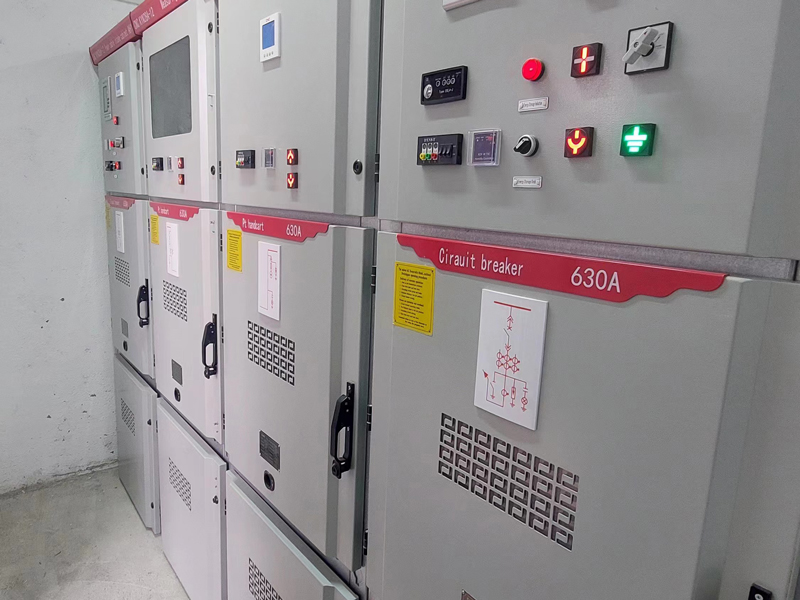
Defining the Fundamentals
To compare them fairly, we need to start with a clear, standards-based understanding of each piece of equipment.
What is Switchgear?
Switchgear is a group of circuit protection devices housed together in one unit. Its main jobs are to protect, control, and isolate electrical equipment.
Think of it as the guardian of a power system. When a fault like a short circuit or overload occurs, switchgear acts fast to cut off power, protecting equipment and keeping people safe. As defined by IEEE Power & Energy Society standards, it is a system built for strength and long-term reliability.
Key parts include draw-out circuit breakers, protective relays, instrument transformers (CTs and PTs), and strong, often compartmentalized busbar systems.
What is a Switchboard?
A switchboard takes power from one or more sources and splits it among several smaller circuits. It is the distribution hub of a building’s electrical system.
The National Electrical Code (NEC) defines it as a large single panel, or group of panels, holding switches, overcurrent devices, and busbars. Its main job is to take a large block of power and route it safely to loads like lighting, HVAC, and outlet panels.
Common parts include fixed-mounted breakers, switches, fuses, busbars, and metering equipment.
Switchgear vs Switchboard Key differences: A Head-to-Head Comparison
Placing switchgear and switchboards side by side makes their differences much easier to see.
| Feature | Switchgear | Switchboard |
|---|---|---|
| Primary Function | Protection, Control, Isolation | Power Distribution |
| Voltage Level | Medium to High Voltage (>600V) | Low Voltage (<600V) |
| Governing Standard | UL 1558, ANSI/IEEE C37 | UL 891 |
| Construction | Compartmentalized, Metal-Enclosed | Single Structure, Open Frame |
| Breaker Type | Draw-out (Withdrawable) | Fixed (Molded Case) |
| Fault Rating (AIC) | Very High | Moderate to High |
| Safety Features | Arc-resistant, Remote Operation | Dead-front construction |
| Maintenance | Can service individual units live | Requires full de-energization |
| Typical Application | Substations, Data Centers, Heavy Industry | Commercial Buildings, Light Industry |
Function: Protection vs Distribution
The functional difference is the most important place to start.
- Switchgear is an active protection system that uses smart relays to detect problems and trip a breaker, often with carefully timed steps to make sure only the affected part of the system goes offline.
- A switchboard plays a more passive role. Its main purpose is to divide power among circuits. While its breakers do provide overcurrent protection, a switchboard does not have the advanced control and coordinated protection that switchgear offers.
Voltage and Current Ratings
This is one of the clearest dividing lines between the two.
- Switchboards are almost always used in low-voltage systems, typically at 600V or less, with common voltages like 480/277V or 208/120V.
- Switchgear starts where switchboards leave off. While low-voltage switchgear does exist, the term most often refers to medium-voltage equipment built for systems from 2.4kV up to 38kV or higher, handling the large amounts of energy that come with those voltages.
Construction and Design
Their physical construction reflects their different purposes clearly.
- Switchgear uses a metal-enclosed, compartmentalized design, where each major part, including the breaker, the busbars, and the instruments, sits in its own grounded metal section, stopping a fault in one area from spreading to others.
- Switchboards, governed by UL 891, use a more open, single-structure design. Parts are mounted to a frame, and while a dead-front design prevents accidental contact with live parts, it does not offer the same level of internal separation that switchgear provides.
Governing Standards
The standards that guide their design and testing show what each piece of equipment is meant to do.
- Switchboards are tested to UL certification standards like UL 891, which focuses on safe and effective power distribution in low-voltage commercial and industrial settings.
- Switchgear must meet much stricter standards, such as UL 1558 for low-voltage switchgear and the ANSI/IEEE C37 series for medium-voltage equipment. These standards put strong emphasis on fault containment, short-circuit ratings, and reliable operation under extreme conditions.
Safety and Maintenance
How you maintain each piece of equipment is a key difference to understand.
- Switchgear almost always uses draw-out circuit breakers, which lets a qualified technician safely remove a single breaker for testing or replacement while the main bus stays energized, cutting downtime significantly.
- Switchboards use fixed-mounted breakers that are bolted directly to the bus. To service or replace a breaker, you must shut down the entire switchboard, which can mean a full facility outage. This difference has huge consequences for facilities that cannot afford to go offline.
See the complete technical specs of our Switchgear range.
Download the full engineering guide for Switchgear & Substation solutions in one platform.
A Scenario-Based Deep Dive
Looking at real projects makes these differences much easier to understand. Here are two common scenarios that show how these differences drive the final choice.
Scenario 1: The Data Center
- Scenario: A new large-scale data center is being built. The client’s top requirement is 99.999% uptime, also known as “five-nines” availability.
- Needs Analysis: This project demands the highest possible reliability, no tolerance for unplanned outages, and a safe environment for maintenance workers. The system must be able to contain faults without affecting critical server loads, and maintenance must happen without interrupting service.
- The Verdict & Why: Medium-voltage switchgear is the only acceptable choice for the main electrical distribution system. Its compartmentalized, arc-resistant design contains the energy of a potential fault. Smart protective relays can detect and isolate a problem almost instantly.
From our experience designing electrical systems for critical facilities, the decision often comes down to maintenance philosophy. In a data center, shutting down the entire system to replace one breaker is simply not an option. This is where the draw-out feature of switchgear proves its value, a lesson that is often learned the hard way.
Medium Voltage Switchgear (KYN28-24)
- Chassis: CNC-processed Al-Zn coated steel with modular rivet assembly.
- Core Breaker: Integrated VS1 series center-mounted vacuum circuit breakers.
- Safety Interlock: Advanced mechanical “Five-Prevention” fail-safe system.
- Insulation: Optimized electrode geometry with heat-shrinkable busbar coating.
- Rating: Compliant with standard ambient conditions (≤1000m altitude / +40°C).
- EMC Shielding: Secondary system interference immunity up to 1.6kV.

Scenario 2: The Office Building
- Scenario: A five-story commercial office building is under construction. It will serve multiple tenants and need power for lighting, HVAC, elevators, and general outlets.
- Needs Analysis: The main need here is reliable and cost-effective power distribution. While reliability matters, a short, planned outage for annual maintenance is acceptable. The project has a set budget, and the electrical room has limited space.
- The Verdict & Why: A low-voltage switchboard is the right solution for this project. Its primary function, distributing power, matches the building’s needs perfectly. It works well within the sub-600V range, costs less than switchgear, and takes up less floor space. The switchboard will receive power from the utility transformer and send it efficiently to panels on each floor.
Low Voltage Switchboard (GCK Withdrawable)
- Standard Compliance: Fully compliant with IEC60439-1 for global industrial safety.
- Modular Framework: C-type profile frame with E=25mm modular hole patterns for flexibility.
- High Capacity: Rated current up to 5000A with 690V/1000V insulation voltage rating.
- Withdrawable Units: High-modulus drawer design (1/2 to 3 units) for MCC and feeder reliability.
- Safety Isolation: Independent compartments for busbars, functions, and cables to prevent arc diffusion.
- Environment: IP30/IP40 protection with galvanized internal structure for reliable earthing.

Making the Right Choice
Choosing between switchgear and a switchboard goes beyond technical specs. It also involves financial and practical factors that affect the project for its entire life.
Total Cost of Ownership
Looking only at the purchase price is a mistake that can cost you later. A Total Cost of Ownership (TCO) analysis gives you a much more accurate picture of what you will actually spend.
- Switchgear costs significantly more upfront than a switchboard. However, its operating costs can be lower in the right applications, because its strong design leads to a longer service life, and the ability to do maintenance without a full shutdown can save millions in lost revenue for a critical facility.
- A switchboard costs less upfront, which makes it attractive for budget-driven projects. However, operating costs can rise if maintenance requires frequent or long outages. As confirmed by guidance from industry experts, the true cost only becomes clear over the full life of the equipment.
A Practical Project Checklist
Use these questions to guide your team’s decision:
- What is the system’s primary voltage level? (Above 600V points directly to switchgear.)
- What is the primary function needed? (System-level protection or downstream distribution?)
- How critical is uninterrupted operation for this facility? (Mission-critical facilities favor switchgear.)
- What is the required short-circuit withstand rating? (Higher ratings often require switchgear.)
- What are the long-term maintenance plans and the skill level of the maintenance staff?
- What is the project’s budget, considering both upfront and long-term costs?
- Are there specific NEMA standards or other codes that must be followed?
Conclusion: The Core Difference
The choice between switchgear and a switchboard comes down to one question: does the project need intelligent protection and control, or does it need simple power distribution?
Answering that question honestly, based on your project’s specific needs, will lead you to the right equipment every time.
A simple analogy can help make this clear. If an electrical system is a highway network, switchgear is the 24/7 traffic control and emergency response center that manages the main roads and handles problems with precision. A switchboard is the system of exit ramps and local streets that guides traffic efficiently to its final destination.
Understanding the real differences between these two essential pieces of equipment is not just a classroom exercise. It is a fundamental part of designing, building, and maintaining electrical systems that are safe, reliable, and right for the job.


