 CNC ELECTRIC GROUP ZHEJIANG TECHNOLOGY CO.,LTD
 Products
 Projects
 Solutions
 Service
 News
News About CNC
 Contact Us
Electrical transformers are the silent workhorses of our electrical grid. They make modern life possible by moving electricity from power plants to our homes and businesses. While they may look like simple steel boxes on the outside, inside lies a carefully engineered system of parts working together.
At its most basic level, an electrical transformer contains three essential internal components: the Core, the Windings, and the Insulation System. These three parts work together to change voltage levels safely and efficiently.
This guide goes beyond a simple list. We will break down the key transformer internal components, explain what each one does, show how they work together, and explain why their design matters for both performance and safety.
The Transformer’s Heart
The core and windings are the active parts of the transformer. They are responsible for the fundamental process of changing voltage from one level to another. Understanding these two components is key to understanding how any transformer operates.
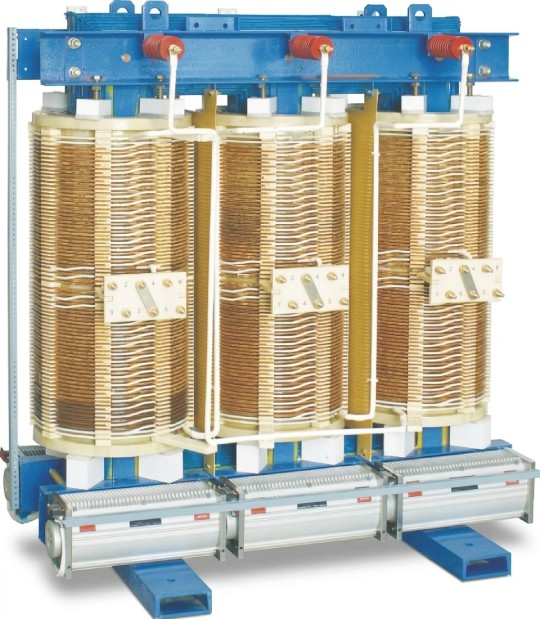
The Magnetic Core
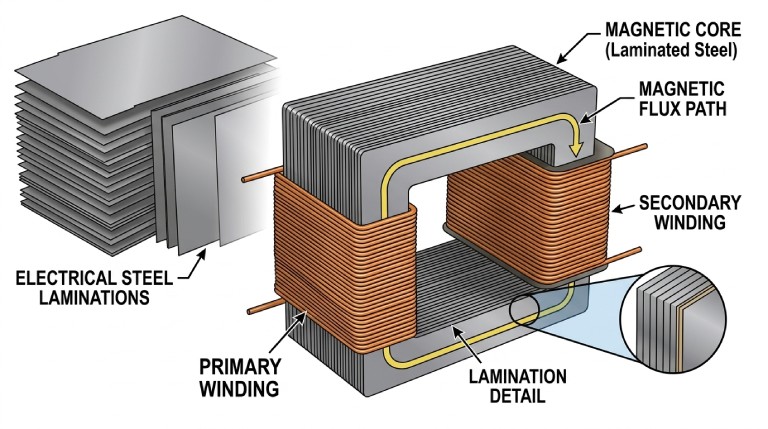
The core’s main job is to provide a low-resistance path for magnetic energy. Think of it as a magnetic highway that carries energy from the input side to the output side. It channels this energy efficiently so very little is lost along the way.
The core is built from thin sheets of silicon steel, typically 0.23–0.5 mm thick. Each sheet is coated with a thin layer of insulation to reduce energy losses caused by eddy currents. This layered design keeps the transformer running efficiently.
The two most common designs are core-type, where the windings wrap around the core legs, and shell-type, where the core wraps around the windings.
The Windings
The windings are the engine of the transformer. They transfer energy between circuits through electromagnetic induction, a principle described by Faraday’s Law of Induction. Without the windings, no energy transfer would be possible.
These coils are typically made of copper or aluminum. Copper conducts electricity better, while aluminum is lighter and costs less, making it a good choice for certain uses.
The ratio of turns between the primary winding and the secondary winding determines the voltage change. More turns on the secondary side create a step-up transformer, while fewer turns create a step-down transformer.
Protection and Cooling Systems
A transformer’s reliability and lifespan depend entirely on its support systems. The insulation and cooling systems are the unseen protectors that manage electrical stress and heat buildup during operation.
The Insulation System
The insulation system keeps all conductive parts electrically separated from each other. This prevents short circuits and dangerous arcing failures inside the transformer.
In oil-filled transformers, the fluid inside the tank serves two main purposes: it provides strong electrical insulation and removes heat from the core and windings. This oil works together with insulating paper, such as Kraft paper or pressboard, to create a solid and reliable insulation structure.
For dry-type transformers, the insulation is typically solid cast epoxy resin or simply air inside a ventilated enclosure.
The Cooling System
Energy conversion is never perfectly efficient, and both the core and the windings produce heat during normal operation. This heat must be removed to prevent damage to the insulation and to keep the transformer running for a long time.
Different cooling methods are used depending on the transformer’s size and type:
- Dry-Type: Air Natural (AN) or Air Forced (AF) using fans.
- Oil-Immersed: Oil Natural Air Natural (ONAN), where oil moves by convection to external radiators, or Oil Natural Air Forced (ONAF), which adds fans to the radiators for greater cooling capacity.
For any industrial or commercial use, choosing a transformer with a strong insulation and cooling system built for the specific load and environment is very important. This directly impacts how reliably the transformer operates and how long it lasts. Explore our range of reliable and efficient transformers designed for maximum durability.
Transformer Components Comparison by Type
Not all transformers are built alike. The transformer parts vary significantly based on the application, power rating, and transformer type. This comparison highlights the key differences between common transformer categories.
| Component | Distribution Transformer | Dry-Type Transformer | Power Transformer |
|---|---|---|---|
| Core | Laminated Silicon Steel | Laminated Silicon Steel | High-grade, low-loss steel |
| Windings | Copper/Aluminum | Copper/Aluminum (often resin-cast) | Primarily Copper, complex winding design |
| Insulation | Mineral Oil & Paper | Epoxy Resin / Air | High-grade Oil & Pressboard |
| Cooling | Radiators (ONAN) | Air Vents (AN/AF) | Complex systems (OFAF, ODWF), pumps, fans |
| Tank | Sealed Steel Tank | Ventilated Enclosure | Heavy-duty tank with conservator |
Ancillary and Protective Parts
Beyond the main active parts, many supporting components are essential for connection, monitoring, and protection. These parts complete the full operational system of the transformer.
From a maintenance point of view, these are the components we check first. During a routine inspection, we look for cracks or contamination on bushings, make sure the pressure relief device is clear, and check all gauges for normal readings.
Bushings and Terminals
Bushings provide a safe, insulated path for conductors to connect the internal windings to the outside electrical network. They are typically made from strong materials like porcelain or modern polymers to handle high voltage and tough outdoor conditions.
Tank and Conservator
The main tank is the steel enclosure that holds the core, windings, and insulating oil, protecting them from weather and physical damage. On larger transformers, a smaller conservator tank sits on top to handle the expansion and contraction of the oil as its temperature changes throughout the day.
Key Protective Devices
These devices are the transformer’s safety net.
- A Buchholz Relay, found on oil-filled transformers, detects gas buildup caused by an internal fault and triggers an alarm or shuts down the circuit before serious damage occurs.
- A Pressure Relief Device is a spring-loaded valve designed to protect the transformer tank from too much internal pressure, preventing a dangerous tank rupture.
- Monitoring gauges, such as the Winding Temperature Indicator and Oil Level Indicator, give operators the data they need to maintain the transformer and catch problems early.
How Components Work Together
A transformer is a dynamic system where every part plays a role in a continuous process. Here is how energy flows through the system:
- Energy In: High-voltage electricity enters the transformer through the High-Voltage Bushing.
- Magnetic Field Creation: Current flows into the Primary Winding, generating a strong magnetic field around the core.
- Flux Channeling: The Core concentrates this magnetic energy and guides it efficiently to the secondary side.
- Voltage Induction: The moving magnetic field passes through the Secondary Winding, creating a new voltage at a different level.
- Heat Management: Throughout this process, losses generate heat. The Insulating Oil absorbs this heat and carries it to the Radiators, where it releases into the surrounding air.
- Energy Out: The changed voltage exits through the Low-Voltage Bushing to power the connected load.
- Constant Protection: At all times, the Buchholz Relay and Pressure Relief Device stand ready to respond if any internal fault occurs.
Conclusion
A transformer is a well-designed system made up of active, passive, protective, and monitoring components all working together. Each part has a specific job, and no single part works alone.
A solid understanding of these transformer internal components is essential for anyone involved in choosing, operating, or maintaining this critical electrical equipment. The more you know about what is inside a transformer, the better decisions you can make.
Knowing what’s inside a transformer gives you the knowledge to make smart choices that support safety, reliability, and efficiency for your power systems.


